


During the second half of day 51 of my walk from Turkey to Mongolia, I passed through the coastal villages of Lenkeran and reached the city center. A long conversation in Talysh at a tea house, levengi tandoors lining the villages, a road extending beyond a closed bridge, the sun setting behind the Lerik mountains, and a stand-up television interview as soon as I entered the city... The day ended at approximately 35 kilometers. In this post, while describing that day, I am also sharing practical information for anyone planning to visit Lenkeran: what levengi is, where to stay in Lenkeran, how to walk through the coastal villages, Lenkeran Castle, and the general atmosphere of the city.
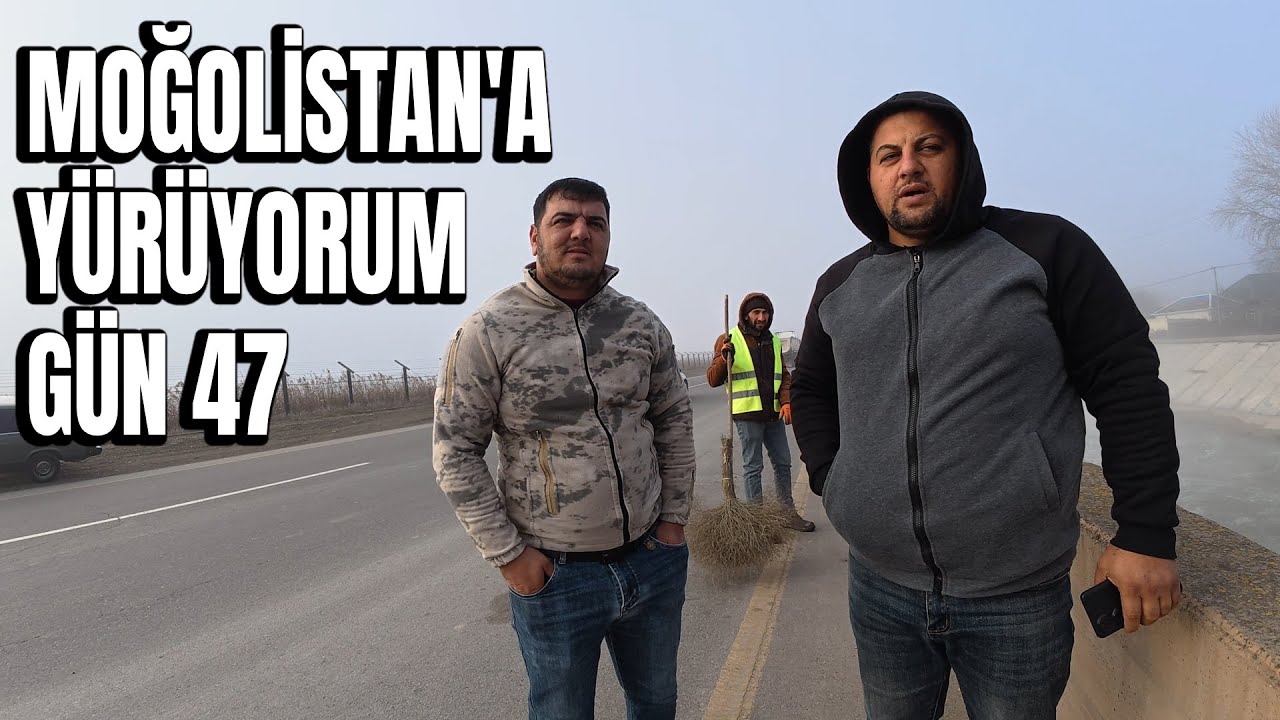
Watch the Video: Day 51, I Arrived in Lenkeran
Talysh Conversation at a Tea House: The Language is Disappearing from Generation to Generation
This part of the day began at a village tea house. I couldn't refuse the older men who called out, "Have a cup of tea," so I had two cups and left. One of the men at the table had worked in Turkey, been a sailor, and done many different jobs. When I asked what he did, he said, "I'm waiting for work"; apparently, when they get a job, they come to the coffee house and let people know. There wasn't much else to do besides going fishing in the lake behind them, carrying loads in the homemade tandoors, and driving taxis, other than farming. The young people are leaving, the houses are being sold; this is the story behind the "for sale" signs I saw on the walls along the road.
When I spoke a few Talysh words I had learned the previous day, everyone was surprised. But what really caught my attention was this: the young Talysh man who brought us tea did not know Talysh, and he was studying in Baku. One of the older men at the table also knew very little. He explained that his family had come down from Lerik, that his grandfather and father spoke Talysh at home, but that the children had given up the language over the last 30–40 years. I also asked the children I met on the road toward evening: "We are Talysh, but we don't know Talysh; Turkish is enough," they said. There is a generation in this region that has preserved its identity but lost its language.
Shirinsu, Liman, Boladi: Walking Through Lenkeran's Coastal Villages
After leaving the tea house, I left Shirinsu and continued toward Liman, then Boladi, and Ülge. Here, the villagers call these villages "towns." They said Shirinsu had approximately 200 houses and a population of 500–600. Most of the villages are built along the road; half are empty, and some are for sale. At the entrance of every village, there are photos of martyrs on the walls of the markets and shops. Some of what I saw were young people born in 1997, younger than me.
Streams flowing down from the mountains separate the villages, then empty into the Caspian Sea. On the right, I saw a lake and a sign for Kızılağaç National Park; the sign said 18 kilometers. This area is known as a protected area where migratory birds gather in winter. Toward sunset, flocks of birds put on a show in the sky, and I said, "If I were Azerbaijani, I would live here." I still think so.
Liman, as its name suggests, is a port village. Its square has bakeries, a market, and a colorful park. Something caught my attention here: I saw far more women on the street, from the shepherdess to the market cashier, the shoppers in the market, and the cleaning workers. Even the monuments in the square feature female figures prominently. This difference really stood out to me when compared with the Bilesuvar side. This is something I saw on the road, not a generalization; but this feeling grew stronger as I approached Lenkeran.
Cars That Stop Without Stopping and Little Followers
People on this road also didn't stop greeting me. An older man on a motorcycle said hello and drove off, then stopped again when he returned after finishing his business. An older man wanted to give me his 6-month-old son, Ayhan, to hold. A tough-looking man retired from the military first scared me a little, then told me about his friends in Istanbul. One offered water, one Red Bull, and one tea. I told most of them, "I have everything; your friendly face is enough."
12-year-old Islam came up to me on his motorcycle; he recognized me from videos. I didn't have internet, so I connected to his home Wi-Fi in front of his door and followed him on Instagram. A little later, his friends Zülfikar and others came running. "You have a home too, why are you walking?" they asked. "To travel, to see, and to meet you," I said. What more could there be?
What Is Levengi? Lenkeran's Famous Stuffing
Along the road to Lenkeran, every village has tandoors by the roadside and stalls with "levengi" written on them. Levengi (lavangi in Azerbaijani) is a stuffing unique to this region. They finely chop and thoroughly grind walnuts and onions, then add sour plum paste. The result is a paste-like, slightly sour, and very delicious stuffing. If you like the filling of Turkish içli köfte, you will like this too; the taste is similar, but it is softer and less crispy.
They put this stuffing inside everything: chicken, fish, eggplant, and even lamb. The most common are chicken levengi and fish levengi. It is cooked in a tandoor or oven. My guess is that it has become such a popular method because the oil from the walnuts and the juice from the onions prevent the meat from drying out when it cooks. I had lamb levengi the day before; when I told my Talysh friends, they said, "We've never heard of it before." So it is not that common. That evening, I also had chicken levengi in Lenkeran.
Closed Bridge, Lerik Mountains, and My Dream Home
Before entering Lenkeran, the road splits in two: one toward the sea and the other into the city, toward the bus station. After several days of heavy rain, there was work on the bridges, and the road on the right was closed. I asked, and I asked again: the older men at the tea house, a restaurant owner, a policeman, two taxi drivers... They all said the same thing: "Go left, toward the sea." Even pedestrians couldn't pass. This added about an hour to the journey.
On the road, I saw an older man building his house all by himself. He had laid the bricks himself, gotten the rough construction to this state in one month, and said he would finish it in one year. It made me feel a little sad. When my walk to Mongolia is over, I want to buy some land near a city in Turkey and cultivate it, put a small caravan inside, slowly build the house with my own hands, and get a horse. Maybe over time, it will become a small campsite where people can come and pitch tents. This road makes me think about this the most.
Toward evening, as the sun set behind the Lerik mountains, a hill appeared that looked like it was burning through the clouds. "The mountain of the dwarves' dragon," I said; it really looked like that. After Ülge, I entered the last village before Lenkeran, took photos with a group of children, and arrived in the city as it got dark.
Lenkeran Castle and a Stand-Up Interview
At the point where the road splits, there is one of the city's symbols: Lenkeran Castle, known locally as "gala." The statues in the center also feature a female figure prominently. Right there, a local television crew (APA TV) caught me. A reporter had written to me before when I was in Baku, but we hadn't been able to meet. We finished the interview in 10 minutes in Lenkeran. They asked me what I had seen in Azerbaijan: "One nation, two states," and beautiful people, I said. Indeed, the cars that stopped most often on this road were in Azerbaijan; roughly one out of every 10–15 cars stopped.
After the interview, they also told me the history of the castle: a castle built by Azerbaijanis approximately 200 years ago to fight the Russians, while today's structure has been symbolically reconstructed. Looking back at history, Lenkeran was the center of the Lenkeran Khanate at that time, and the castle witnessed a siege by the Russian army at the end of 1812 and the beginning of 1813. I recommend asking on site how much of the structure you see today is original. Right next to it is a samovar monument referencing Lenkeran's reputation for tea.
Where to Stay in Lenkeran? Practical Information
1. Accommodation
I had two options in mind: Han Lenkeran on the edge of the city, which has a restaurant, and Starway, which is closer to the center. When the road closed, I was equidistant from both; instead of going back, I chose Starway to keep going forward. During the time we filmed the video, they gave me a spacious, clean, cozy "VIP" room with a shower for 50 manat a night; breakfast was included. It didn't have a restaurant, which an older man on the road found out by calling the hotel and then came back to tell me. There are restaurants within walking distance. Prices may change, so check the current situation. I explained ways to stay for less in my budget accommodation guide.
2. Food
I had chicken levengi at a tandoor restaurant near the hotel, and the bill came to 13 manat. While I was eating, an older man who recognized me paid the bill and left; I didn't even have a chance to object. I gave that money to the young man who served me as a tip. If you come to Lenkeran, don't leave without trying chicken or fish levengi.
3. Coming by Foot: Route Notes
| Section | Places I Passed | Note |
|---|---|---|
| Coastal villages | Şirinsu, Liman, Boladi | Quiet village road, levengi tandoors along the road |
| Approaching the city | Ülge and the last village | Lerik mountains view, railway crossings |
| City entrance | Lenkeran Castle, coastal road | Detour on the left due to bridge work |
| Total for the day | Masallı - Lenkeran center | approximately 35 km |
4. Railway and Bridges
I walked alongside the railway for much of the journey. The trains I saw were very slow freight trains; the line extends from Baku to Astara. Check the current schedule for passenger services. Be careful when crossing the tracks; do not walk on the rails. After rainy days, there may be work on the bridges over the streams; ask the locals which road is open before heading out.
5. Weather, Dogs, and Internet
In winter, the weather on this road was cold in the morning, but rose to 10 degrees in the afternoon and dropped to 5 degrees in the evening. While I expected a windy road along the Caspian Sea, it was quite calm. Put on your jacket immediately during a break; I use my raincoat as a windbreaker. There are stray dogs in the villages; most bark and move on, but stay calm. I had no cell service on either of my phones in this region, and I accessed the internet where I found Wi-Fi. If you don't want to lose connection on the road, you can check Azerbaijan eSIM packages from Yırtık eSIM. I explained what I carried in my travel equipment guide. By the way, the sole of the shoes I had been wearing for about 4 months had worn down, and the insides were falling apart; bring spare shoes for long journeys.
Frequently Asked Questions
What is levengi, and what is it made of?
A stuffing unique to Lenkeran and its surroundings, made from walnuts, onions, and sour plum paste. It is usually stuffed inside chicken or fish and cooked in a tandoor or oven.
Where to stay in Lenkeran?
I stayed at Starway, which cost 50 manat a night and included breakfast. If you want an option with a restaurant, you can look at Han Lenkeran, recommended by the locals. The price is from the time we filmed the video.
What is Lenkeran famous for?
Tea, fish, levengi, and its green nature along the Caspian Sea. The castle, samovar monument, and coastal road are the first things you will see in the city.
Is Talysh spoken in Lenkeran?
The region is one of the places where Talysh people live, but most young people do not know Talysh. Azerbaijani Turkish is spoken in daily life; as a Turkish person, I had no difficulty at all.
How long does it take from Lenkeran to Astara?
I planned to complete this distance by walking the next day. The locals said Astara is close to Lenkeran; it takes about an hour by car, so check the current road conditions.
In my previous post, I described the days I walked from Celilabad to Masallı and the entrance to Lenkeran: Walking from Celilabad to Masallı and Lenkeran. While planning this entire journey, I gathered what was useful to me in my travel planning guide. I will describe the continuation of the journey in my next post.


0 comments