


On days 47, 48, and 49 of my walk from Turkey to Mongolia, I left Bahramtepe and walked to Bilesuvar along a steppe road in southern Azerbaijan parallel to the Iranian border, and from there to Jalilabad. Mornings starting with fog at freezing temperatures, a road with almost nothing for 60 kilometers, blistered feet, and people who recognized me from TikTok stopping me every few minutes... These three days were the most crowded but also the warmest days of the walk. In this post, while describing those days, I am also sharing information that will be useful if you plan to walk or travel with a backpack in this region: routes and distances, accommodation and taxi prices in Bilesuvar, winter cold, shepherd dogs, and foot care on long walks.
Watch the Video: Day 47, From Bahramtepe to the Bilesuvar Road
Day 47: Fog at Freezing Temperatures and 60 Kilometers of Emptiness
When I left Bahramtepe, my watch showed 2 degrees, and it dropped to zero shortly after. Steam came out of my mouth as I spoke, the grass by the roadside was frozen, and by 9:30 a.m., the road was invisible in the fog. In the village squares, taxi drivers were waiting for customers; here, out of a habit dating back to the Soviet era, people crowd into a vehicle and travel together, so getting from one place to another is actually easy.
This stage was the road I dreaded most in Azerbaijan. For about 60 kilometers up to Bilesuvar, almost nothing was visible on the map; there isn't even a photo of these roads on Google. By the roadside, there were old Soviet factories, abandoned buildings, a disused railway line, and constantly passing trucks. Later, I saw that it wasn't as scary as I had feared: because it is a border road, police patrol constantly, and there are occasionally shops and gas stations along the way.
The Iranian Border and the Towns of Those from Karabakh
All day, the Araz River and the Iranian border were on my right. On the other side of the border is Iran's Ardabil province; Azerbaijani Turkish is spoken from Ardabil to Tabriz in northwestern Iran. I initially thought the settlements I saw in the interior of the road were refugee camps. Ilkin, whom I met on the road, told me that his family had been resettled here from Karabakh in the late 1980s and 90s, and that people would return as the cities in Karabakh were rebuilt. So these are temporary towns inhabited by displaced Azerbaijanis. There is a memorial for martyrs in almost every village in this region.
Cars That Stop Constantly
Almost everyone in this region uses TikTok, and the app highlights you in the area you pass through. The result: dozens of people stopping, turning around, and sending photos of me to their daughters. A truck driver gave me juice, someone handed me a bag full of chocolate and snacks, and another took out his wallet to give me money. I thanked them all, but I don't take things I don't need. I don't do this out of rudeness; every 500 grams added to the backpack is felt at the end of the day. I gave the extra candies I received to the children I met on the road.
On the road, I also noticed that the sun was always on my right. It seemed to rise on my right in the morning and set on my right again in the evening. I looked out of curiosity: the Earth's axis is tilted at approximately 23.5 degrees. At the end of December, around the winter solstice, the sun rises in the southeast and sets in the southwest in the Northern Hemisphere, drawing a low arc in the southern part of the sky all day. Because I was walking southeast, the sun remained on my right all day. This is also why the right side of my face burned despite me applying sunscreen.
As evening approached and the sun went behind the clouds, the temperature immediately dropped to 5 degrees. I stopped at 31 kilometers; the friends who had promised to take me to Bilesuvar arrived. Three separate vehicles had previously said they would drop me off, but I had waited because I had made a promise. My watch closed the day at 31.12 kilometers.
Watch the Video: Day 48, Bilesuvar
Day 48: Taxi Bargaining, Tea with Police, and a 15-Kilometer Road Companion
After resting for a day, I had to return to the point where I had woken up in the morning. The hotel reception called a taxi. The normal round-trip price for this distance is around 15-20 manats; I offered 20, and the man asked for 30. When the man at the reception said, "Don't get in," I gave up. The hotel security guard said that every morning there are shared cars going in the same direction for 2 manats per person. In the end, I agreed on 10 manats with a taxi driver at the bus stop. Lesson: in this region, always discuss the price before getting into a taxi, and if you are not sure, ask a local.
On the road, I also talked with the taxi driver about the prices of houses and land in the region. According to what he told me, a ready-made house in the village was around 25,000 manats, and in the center of Bilesuvar, around 35,000 manats; a 2,000-square-meter plot of land in the village could be bought for a few thousand manats. These are figures I heard in a conversation, not official prices; but they surprised me when compared to Turkey.
While passing Semedabad, the police invited me for tea. At first, I thanked them and wanted to continue, but then I sat down, and six more police officers came from the police station. They were all watching me. One said that if I got into trouble up to Astara, I should call him, and he would come no matter where I was. All the police officers I met in Azerbaijan were very helpful toward foreigners, especially those coming from Turkey.
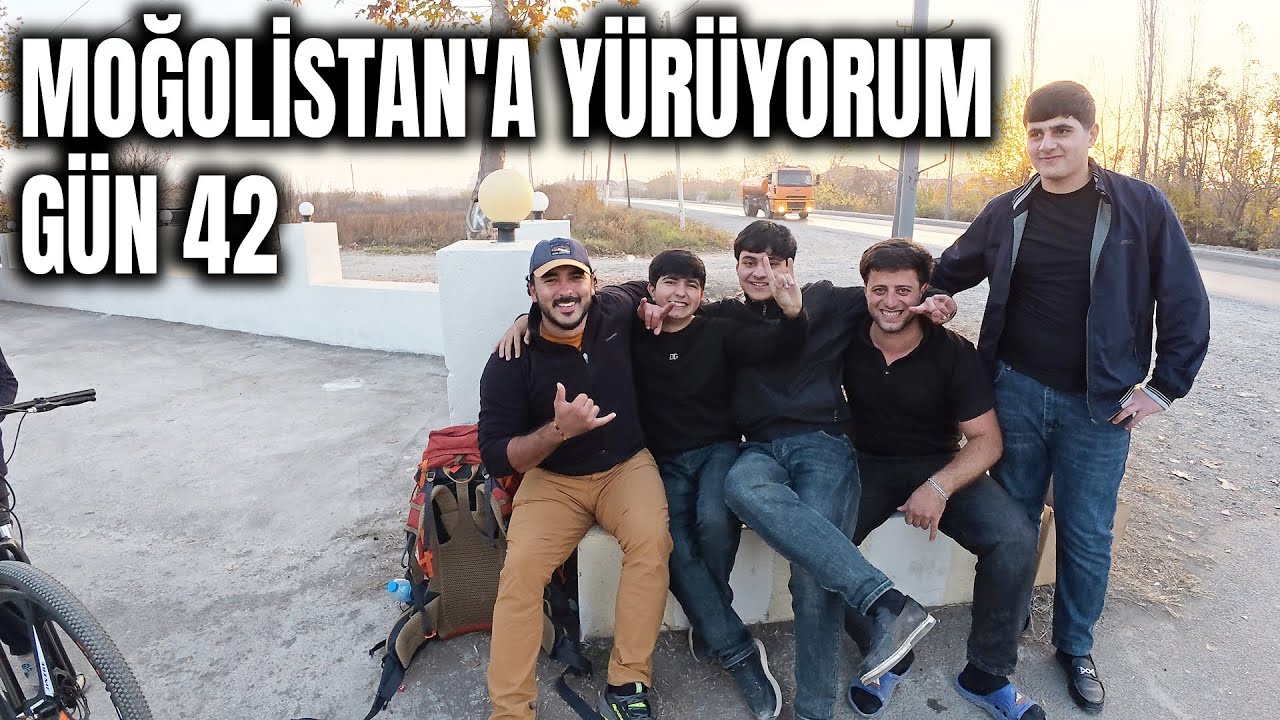
In the second half of the road, a teacher friend left his car and started walking with me, and he did not leave my side for 15 kilometers. So many people stopped that on the day I entered Bilesuvar, I probably shook hands with 500 people: children, shopkeepers, doctors, veterans. I had never been so recognized anywhere.
The Story of Mübariz İbrahimov
A doctor I met on the road told me the most remembered name of Bilesuvar: Azerbaijan National Hero Mübariz İbrahimov. According to what was told, in June 2010, during the ceasefire period, he went alone to a police station on the front line, and after fighting for hours, he lost his life. He was only in his early 20s. Books have been written about him in Azerbaijan, and the high school in Bilesuvar bears his name; at the end of the walk, I passed in front of this high school. Everyone I spoke to said that this story was a great source of morale in the country.
In the evening, I arrived at the Zirve hotel in Bilesuvar. My watch showed 29.98 kilometers.
Watch the Video: Day 49, From Bilesuvar to Jalilabad
Day 49: A Veteran's Story, Dinner in a Vineyard, and Jalilabad
At night, the temperature was minus 1 degree; in the morning, it was cloudless and sunny, and by noon, it reached 10 degrees. The weather in this region is very changeable: it gets cold one moment and warm the next. The tall man who tried to give me money at the hotel the previous evening was actually a Karabakh veteran; his name was Eldar. In the evening, I had dinner with him and a young friend. He told me about going to the front line voluntarily in the 1990s, the friends he lost by his side, and why what happened in Hocalı was such a deep wound in Azerbaijan. He said he could not recover for ten years after the war, and that he could not sleep at night and wandered in the forests. He told me that he saw me for the first time when he gave me the last water I had left while I was giving water to a shepherd who had run out on the road. I don't even remember that moment; for him, it was important that a traveler shared his water. Both of our eyes filled with tears.
When I left Bilesuvar, I turned off the Baku road, the road narrowed, and the sides turned to mud. Every time a vehicle came, I pulled over and stepped into the mud. Because this road was the only connection between Bilesuvar and Jalilabad, it was again very crowded. A man on the road had invited me to his shop; when I arrived, he had set up a table with chicken and pickled grapes next to the vineyard. They apparently grow grapes not for wine, but to sell at the market; the harvest lasts from late summer to September. It was a one-hour break, but it was worth it.
The teacher friend who had walked beside me the previous day joined the road this time. Acquaintances on the road came one by one and offered treats: dried dates, nuts, and tea with cloves. In this region, dates are also called the fruit of paradise, as in some parts of Turkey. In the evening, I arrived at the Olympic sports complex in Jalilabad. The distance between Bilesuvar and Jalilabad was approximately 26 kilometers.
Bilesuvar and Jalilabad Road: Practical Information
1. Route and Distances
| Day | Stage | Distance | Note |
|---|---|---|---|
| 47 | Half of the Bahramtepe - Bilesuvar road | 31.12 km | No accommodation on the road, I went to Bilesuvar by vehicle in the evening |
| 48 | Bilesuvar road - Bilesuvar center | 29.98 km | Returned to the same point by taxi in the morning |
| 49 | Bilesuvar - Jalilabad | approximately 26 km | Narrow and muddy road, Olympic complex in Jalilabad |
There is also a border crossing to Iran in Bilesuvar, but I chose to continue inside Azerbaijan, go down to the shores of the Caspian Sea to Astara, and cross from there. The plan is this: Jalilabad, Masalli, Lankaran, Astara, and Iran.
2. Accommodation
At the Zirve hotel where I stayed in Bilesuvar, a clean room for the night with breakfast was 50 manats; it also has a restaurant. They also showed me a cheaper room for 40 manats, but it was very poorly maintained. The option without breakfast was quoted at 30 manats. Another option for accommodation in the small towns of Azerbaijan is the Olympic sports complexes that have hotel rooms; some are good, some are poorly maintained. The prices are from the time we filmed the video, check the current situation. I explained ways to stay cheaper in my cheap accommodation guide.
3. Transportation and Taxi Prices
In the villages, taxis wait in the square. For short distances, at the time we filmed the video, approximately 10-15 manats were paid, and 2 manats per person in a shared car. The approximately 170-kilometer road from Bilesuvar to Baku by shared taxi was 12 manats per person. Some taxi drivers who realize you are a foreigner may ask double; before getting in, clarify the price and show your destination on the map.
4. Winter Cold and Equipment
At the end of December in this region, mornings are 0-2 degrees, noon is 8-10 degrees, and nights are minus 1-3 degrees. Gloves are a must in windy open plains. The moment the sun sets around 17:00, the temperature drops a few degrees. I stopped staying in a tent this season; I also sent my tent to Baku, and my sleeping bag is already a 15-degree summer sleeping bag. I covered the gaps without accommodation using the "walk halfway, go to the nearest city by vehicle in the evening, return to the same point in the morning" method. I explained what I carried in my travel equipment guide.
5. Shepherd Dogs
I passed by herds along the road. During the day, since wolves do not come down, the dogs are calmer; if you do not leave the road and do not head toward the pens or shepherd houses, they generally stop at the border and turn back. The most useful thing is to greet the shepherd: when the shepherd sees you, the dogs also calm down. In this region, a greeting is truly like a key.
6. Foot Care
The insoles I had made in Baku raised my foot too much, squeezed my toes forward, and blisters formed under my foot. On day 47, I threw away the old, melted insoles and walked without insoles, and my foot felt much more comfortable. I drained the blisters with a sterile needle; if you are going to do this, clean the needle and the skin, and consult a health professional if there are signs of infection. I take my breaks every 10 kilometers; even extending the break to 12-15 kilometers puts too much strain on the feet. Even if the people you meet on the road call you to wait for them at the next gas station, do not break your own break routine.
In Azerbaijan, the internet was the thing I needed most along the road: to share location, find a hotel, ask a taxi price. You can check Azerbaijan eSIM packages from Yırtık eSIM. I also explained how I maintained motivation on the long road in my road life guide.
Frequently Asked Questions
Where is Bilesuvar, and how do you get there?
Bilesuvar is a rayon center on the Iranian border in southern Azerbaijan. It is approximately 170 kilometers from Baku; at the time we filmed the video, it was 12 manats per person by shared taxi.
Where to stay in Bilesuvar?
I stayed at the Zirve hotel in the center: 50 manats per night including breakfast, it has a restaurant. Besides this, there are also rooms in the Olympic sports complex in the city.
Can you cross from Bilesuvar to Iran?
There is a land border crossing to Iran in Bilesuvar. I planned my route according to the Caspian shore to Astara. The operating status of the border crossings and whether they are open to foreigners may change, check the current information before setting out.
Who is Mübariz İbrahimov?
A soldier from Bilesuvar and an Azerbaijan National Hero. He lost his life on the front line in 2010; the high school in Bilesuvar bears his name and he is remembered with great respect in Azerbaijan.
Is it safe to walk in this region?
In my experience, yes. Because it is a border road, police patrol frequently and people are extremely helpful. The things you need to pay attention to are traffic on narrow roads, evening cold, and shepherd dogs.
In my previous post, I described the days I walked from Ağcabedi to Beylegan and to Türkler village: Ahıska Turks in Azerbaijan: Türkler Village. In my next post, I will describe the days I walked from Jalilabad to Astara on the Iranian border via Masalli and Lankaran.


0 comments