


On days 45 and 46 of my walk from Turkey to Mongolia, I left Ağcabedi and walked along the edge of the Ağgöl National Park to Beylegan, and from there to Bahramtepe in the İmişli region. A village named "Türkler" on the map caught my eye, and when I arrived, I found myself in a tea house with 20–30 Ahiska Turks. In this post, while describing those two days, I also share the story of the Ahiska Turks in Azerbaijan and information that will be useful if you plan to travel by foot in this region: the route, accommodation and taxi prices, phone registration and internet, the cold, dogs, and foot health on long walks.
Watch the Video: Day 45, From Ağcabedi to Beylegan
Day 45: 31 Kilometers Along the Edge of Ağgöl National Park
After resting for two nights at the Royal Palace hotel in Ağcabedi, I set out at 10 a.m. I had walked for a month and a half in 45 days; when I calculated it, it turned out as if I had walked one day and rested the next on average. That sounds like an ideal ratio on paper, but in reality, it was more irregular: sometimes I walked for two days and rested for one, and sometimes I stopped for a week.
For two days on the left side of the road was Ağgöl National Park: a large lake, reed beds, forested areas, and plenty of birds. For hours, I saw neither a village nor a gas station. At one point, I saw a large animal running quickly along the side of the road; I thought it was a bear, but I couldn't be sure. I had my supplies with me; still, you should never travel without water and snacks on a road like this. The only gas station I stopped at along the way was abandoned, so I took off my shoes and took a break at the bus stop next to it.
Avşar Village and Shepherd Dogs
I saw a sign for "Avşar" on the road. The Avşars are one of the Oghuz tribes; they also live in many places in Anatolia, from Central Anatolia to Antep and Mersin, and are known for their love of freedom. The back of the village opened up to the national park, and the shepherds' houses were right in the middle of the pastures. The large shepherd dogs protecting the flocks barked again. The reason these dogs are so large is wolves; they need to be brave enough to protect the flock against wolves. That is why you should not treat these dogs like stray dogs or enter their territory.
A Conversation Like an Interview, Water and Supplies
A man stopped by the side of the road in his car and asked me everything one by one: when I started (about 3 months ago), how many kilometers I had covered (1,200–1,300), how many kilometers I walk a day (30–35), when I would arrive in Mongolia (1–2 years), and if I was married. It was almost like a prepared interview. Shortly after, another man handed me water and snacks just as my water supply was running low. A little further ahead, a woman passed by in her car, then came back and left me a sparkling water and a still water. Because this road is long and empty, everyone knows that walkers will need water.
The roadside was littered with glass bottles and trash. I don't throw empty bottles on the ground; I fill them with my trash and leave them at the first trash can I find. If you are traveling by car, your trash can stay in the car; it is not that difficult to dispose of it at the next gas station.
A 50-Kilometer Gap and Back-and-Forth by Taxi
There was a gap of about 50 kilometers between Ağcabedi and Bahramtepe with no accommodation. Since the temperatures dropped to 2–3 degrees at night, I didn't consider staying in a tent. Instead, I split the journey in two: I walked 31 kilometers, a friend picked me up at the gas station by the roadside in the evening, and the next morning I took a taxi back to the same point and continued from where I left off. This is the most practical way to solve the accommodation problem without breaking up the walk.
Towards evening, I sat down for 30 minutes, and when the sun set, I started shivering because I was sweaty. The temperature was 10–14 degrees, but when you stand around in a wet t-shirt, your body cools down quickly. Take your break before the sun sets in this season, and put on an extra layer as soon as you stop. I made another mistake as I approached the meeting point: I had sent my friend the location of the wrong gas station out of the two. When I asked if there was a place to stay there, they told me there was no place by the roadside and that the hotel was in the district center. There was also a minor argument about the camera at the gas station; I respect anyone who does not want to be filmed and do not use their images.
Watch the Video: Day 46 Part 1, From Beylegan to Şerk Village
Day 46: The Insoles I Had Made in Baku and the Beylegan Road
After day 45, my feet and ankles hurt, so I went to Baku. The sole of my shoe had worn down, and because I had flat feet, my gait was starting to deteriorate. I had custom insoles made at a place recommended by an Azerbaijani orthopedic friend. The craftsman pressed my foot onto an A4 piece of paper and drew around it, took the measurements in five minutes, and had them ready by the next evening. The price was 90 manats, which was about 50 dollars.
I rate the result a 7 out of 10. It was good that it raised the arch of my foot, but the insoles were cut too small for the shoes, and my toes were pointing forward. The result I saw in the evening confirmed this: the bottom of my foot swelled, and a sore opened up somewhere. Lesson: have them made by showing which shoe you will use the insoles in, and test them with short walks for a few days before heading out on a long trek.
On the morning of December 13, I overslept. The taxi driver and I misunderstood each other; he first took me into Beylegan, and we lost an hour; in the end, I paid double. Just so you know: an old man took me from Bahramtepe to the meeting point in half an hour for 15 manats, while a young taxi driver asked for 30 manats for the same journey. If you are getting in, clarify the price first and show the destination on the map. Because I left my computer and extra luggage in the room, my bag weighed down to 10 kilos; but I had also forgotten the microphone there, so I saved the sound by speaking loudly that day.
Drivers Who Recognized Me from TikTok and Gifts
Almost everyone in this region uses TikTok; many people recognized me on the road and stopped, and some even turned back. One gave me an energy drink, one half a döner, and one wanted to offer me pickles. I am generally against energy drinks; if you are doing heavy exertion, one a day might work during a break, but I do not recommend drinking them regularly just to feel good. By the way, I thanked several beverage brands that contacted me for advertising, telling them I would not promote products I do not use.
The thing that bothered me most while walking in Azerbaijan was drivers overtaking me right next to me. Many overtake without looking to see if a vehicle is coming from the opposite direction. If you are walking, stay as close to the roadside as possible, and use a light or reflector if you are walking at night.
After passing the village of Dünyamalılar, a man told me about the road towards Salyan and Biləsuvar, and praised the fish of Salyan. In Şerk village, I wanted to give the half döner I had to a shepherd dog; the dog ran away every time I approached. On the map, the name of the next village was "Türkler".
Watch the Video: Day 46 Part 2, Türkler Village and Ahiska Turks
Türkler Village: A Tea Break with Ahiska Turks in Azerbaijan
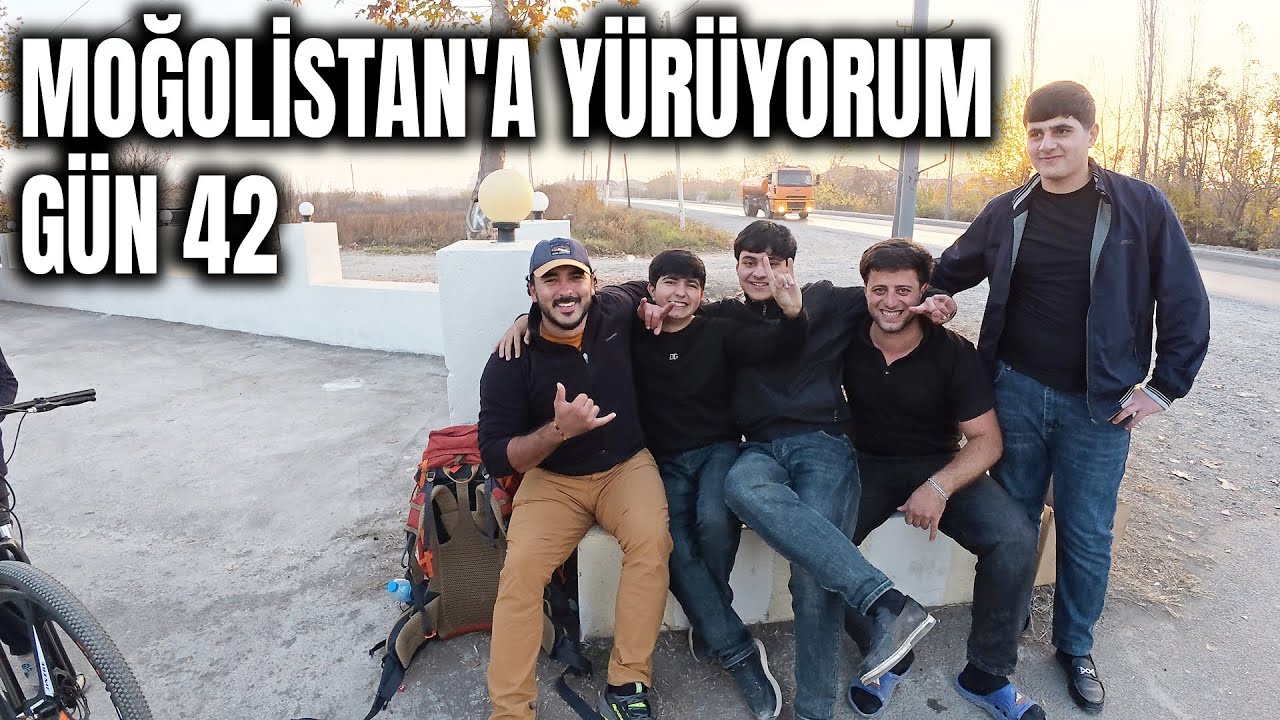
Before arriving at the village, two men who stopped in their car introduced themselves as Ahiska Turks. They told me that their families had been sent to Central Asia in exile in 1944, and from there they had come to Azerbaijan. Most of their relatives lived in Turkey, especially in Bursa and Antalya. Their speech was different from Azerbaijani Turkish and was much closer to the Turkish I speak. They called the tea house in the village on the phone; and since I had arrived at the time I was going to take a break, I went there.
There is a sign for "Türkler" at the entrance of the village. I sat in the tea house with 20–30 old men; among them were those who had worked in construction in Bursa, a 77-year-old man, and those who had come from Karabakh and Füzuli. They did their best for me: tea, water, and snacks. I was told different figures between 250 and 400 households for the size of the village. In the village park, the Turkish and Azerbaijani flags stand side by side; four people from the village were martyred in the war in 1993, and I met the nephew of one of them. While leaving, a teacher told me that his family had come from Uzbekistan in 1989 and had lived in this village for over 30 years.
Who Are the Ahiska Turks?
The Ahiska Turks are a Turkish community living today in the Ahıska (Meskheti) region in southern Georgia, near the borders of Ardahan and Artvin in Turkey. In 1944, during the Stalin era, they were put on trains for security reasons and exiled to Uzbekistan, Kazakhstan, and Kyrgyzstan, and thousands of them lost their lives on the way due to hunger, cold, and disease. After the Fergana events in Uzbekistan in 1989, they were displaced once again, and some settled in Azerbaijan. In Azerbaijan, there are Ahiska Turkish villages especially around Saatlı, İmişli, Sabirabad, and Beylegan. Today, they are also scattered in Turkey, Russia, Kazakhstan, and other countries, and the majority have still not been able to return to their ancestral homeland of Ahıska. When I passed through Georgia, I had not included this region in my route; now I somewhat regret that decision.
From Türkler Village to Bahramtepe: Dates, Mandarins, and Jackals
After the tea house, the busiest hours of the road began. Those who greeted me with "ne tersen" and "necesen", and those who got out of their cars to take photos... Even "how are you" is said differently in different places of Azerbaijan; the Ahiska Turks, however, say "nasılsın" directly. The smiles of so many people make you forget your foot pain; a greeting really carries me five kilometers further.
At the entrance of the village of Bünyatlı, a man had come from Baku to see me. He was originally from İmişli and had studied in Turkey in the 1990s. He gave me a bag of dates and promised to host me when I came to Baku. Shortly after, a minibus stopped, and the women inside handed me their mandarins, candies, and pastries. My bag was suddenly filled with supplies.
Shepherd Dogs: No Problem as Long as You Do Not Head Toward Their Home
As I passed by the shepherd lands, the dogs again ran out to the road, but since I did not leave the road, they stopped at the boundary. I now understand better why the dogs tried to attack me on the previous days when I passed between the houses. In the countryside, do not stray from the road or head toward the pens and shepherds' houses; the dogs are mostly just protecting their territory.
Darkness, Cold, and Entering İmişli
The sun was setting at 17:00, and by 18:00 it was pitch black. When the sun went down, the temperature on my watch dropped from 13 degrees to 10 in an hour; at night it dropped down to 1–2 degrees. After the village of Karalılar, I saw a large-clawed footprint on the road, and then I started hearing jackal sounds. I put on my headlamp. I have a theory: when you shine the light on the dogs, they bark more because they cannot see what is behind them, and when you lower the light, they realize there is a walking person.
Snowy mountains were visible in the distance; that side is the Iranian border. Since there is no land border crossing to Iran here, I will walk all the way through Azerbaijan and pass through Astara. In the evening, I entered the İmişli region and arrived at the guesthouse in Bahramtepe. My watch showed 28.45 kilometers, and 29 kilometers to the room.
Beylegan and Bahramtepe Road: Practical Information
1. Route and Distances
| Day | Stage | Distance | Note |
|---|---|---|---|
| 45 | Ağcabedi - Beylegan road junction | 31.31 km | Along the edge of Ağgöl National Park, almost no facilities on the road |
| 46 | Beylegan road junction - Türkler village - Bahramtepe | 29 km | Bahramtepe guesthouse, 40 manats |
At the time we filmed the video, I had about 250 kilometers left from Ağcabedi to the Azerbaijani Iranian border. It takes about 3–3.5 hours by car from Bahramtepe to Baku.
2. Accommodation and Taxi
The guesthouse in Bahramtepe was 40 manats per night including breakfast; there is also a restaurant at the same place, so you do not need to go out for dinner. This type of roadside facility is very useful for a walker. I could not find accommodation by the roadside between Ağcabedi and Bahramtepe; you need to enter the district centers. To cover a gap without accommodation, a taxi is reasonable in this region: a half-hour journey costs 15 manats. Prices may vary, check the current situation. I explained ways to stay cheaper in my cheap accommodation guide.
3. Phone Registration and Internet
A month after entering Azerbaijan, the mobile internet on my phone was cut off. According to what I was told, if you stay in the country for more than a month with a foreign phone, you need to register the device. I put a new SIM card in the second phone I had and shared internet from it; it worked, but I had to charge another device. If you are staying for a long time, check the registration rules and fee in advance. You can check Azerbaijan eSIM packages from Yırtık eSIM.
4. Cold and Daylight
In mid-December, it is 10–14 degrees during the day and 1–3 degrees at night. The sun sets at 17:00. Plan your daily stage according to the daylight, and to avoid standing around sweaty and shivering, put on an extra layer immediately during your break and keep the headlamp in an easily accessible place in your bag. I explained what I carried in my travel equipment guide.
5. Foot Health and Nutrition
Do not go on a long stage with new insoles or shoes; the risk of swelling and sores is high until your foot gets used to them. The lifespan of a shoe is about 1,000 kilometers. I maintained the protein focus in my diet, and reduced carbohydrates like bread, sugar, and pasta. Since the abdominal muscles do not work while the legs are working, belly fat does not go away easily even on long walks. For the salt I lose through sweat, I eat a few salty crackers on the road.
Frequently Asked Questions
Where do Ahiska Turks live in Azerbaijan?
Mostly in the villages around Saatlı, İmişli, Sabirabad, and Beylegan in the south of the country. On the road between Beylegan and Bahramtepe, there is a village directly named "Türkler".
Why were the Ahiska Turks exiled?
In 1944, the Stalin administration exiled them from the Ahıska region in Georgia to Central Asia for security reasons. After the Fergana events in 1989, some came from Uzbekistan to Azerbaijan.
Is Ahiska Turkish close to Turkish Turkish?
Yes. I understood everyone I spoke to in Türkler village more easily than Azerbaijani Turkish; they speak a Turkish similar to Eastern Anatolian dialects.
Where to stay in Bahramtepe?
I stayed at the guesthouse by the roadside: 40 manats per night including breakfast, and it also has a restaurant. Bahramtepe is attached to İmişli and is on the main road.
Do I need to register my phone in Azerbaijan?
According to my experience, if you stay for more than a month with a foreign phone, the internet can be cut off and registration is required. The rules may change; if you are staying for a long time, check the current information before heading out.
In my previous post, I described the three days I walked from Goranboy to Terter, Berde, and Ağcabedi: Walking the Karabakh road in Azerbaijan. In my next post, I will describe the days I walked from Bahramtepe towards Celilabad and Astara on the Iranian border.


0 comments